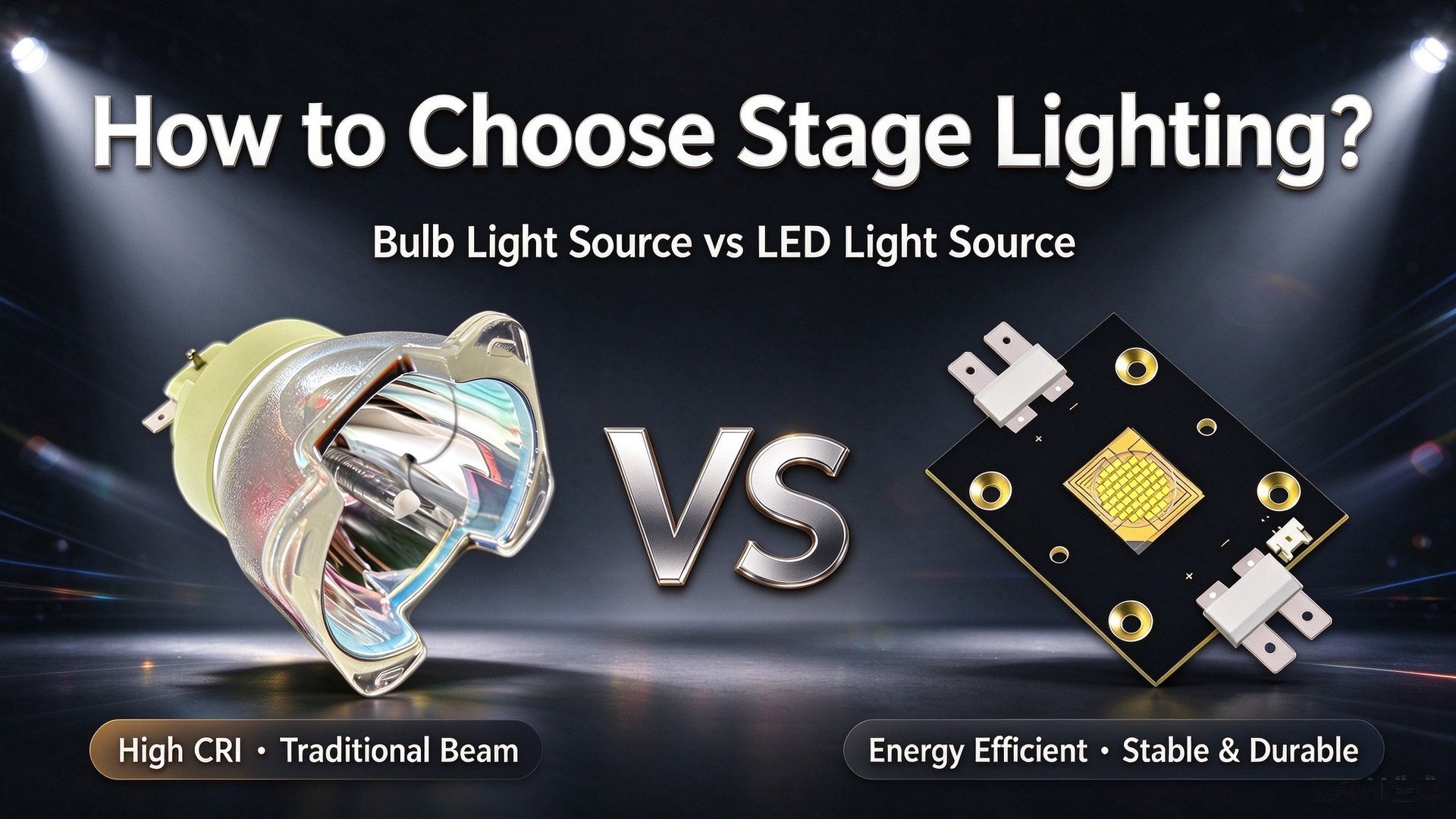
Choosing stage lighting is not about buying the brightest fixture on the spec sheet. It is about matching a light source and a set of functions to the room it will work in every night. This guide distils the product training behind two of our best-selling series — the BMS Beam Light Series and the BMS LED Beam & Spot (BSW) Series — into a decision framework you can use in a quotation meeting.
Two Series, Two Jobs
Every fixture we build falls into one of two families, and each family exists to solve a different problem.
| Series | One-line positioning | Where it wins |
|---|---|---|
| Beam Light Series 12 models |
High-power discharge lamp and high-intensity source. Razor-sharp beam, strong throw, unmissable over distance. | Nightclub beam effects, ballroom key lighting, long-distance sweeping for outdoor tourism and landscape projects. The beam cuts through haze and fog. |
| LED Beam & Spot Series (BSW) 18 models |
LED module source with beam, gobo and wash in one fixture. Long life, minimal maintenance, flexible lighting positions. | Bars and KTV, ballrooms and weddings, school auditoriums. Gobo, wash and beam switch on a single unit — silent, energy-efficient, stable over long hours. |
Everything else we make — profile and face lighting, wash, conference luminaires, entertainment effects, outdoor waterproof fixtures — is covered in separate technical courses. For beam-class products, these two series are the whole story.
The one-sentence rule
Beam Series owns "long-distance beams" — bright, sharp, penetrating. LED BSW owns "one fixture, many roles" — long life, low maintenance, wide application. Say this to a customer once and the rest of the conversation gets much shorter.
Step 1: Understand the Light Source Before the Model Number
The light source is the engine of a beam fixture. It decides brightness, service life and the visual texture of the beam — so it is the first question to settle, not the last.
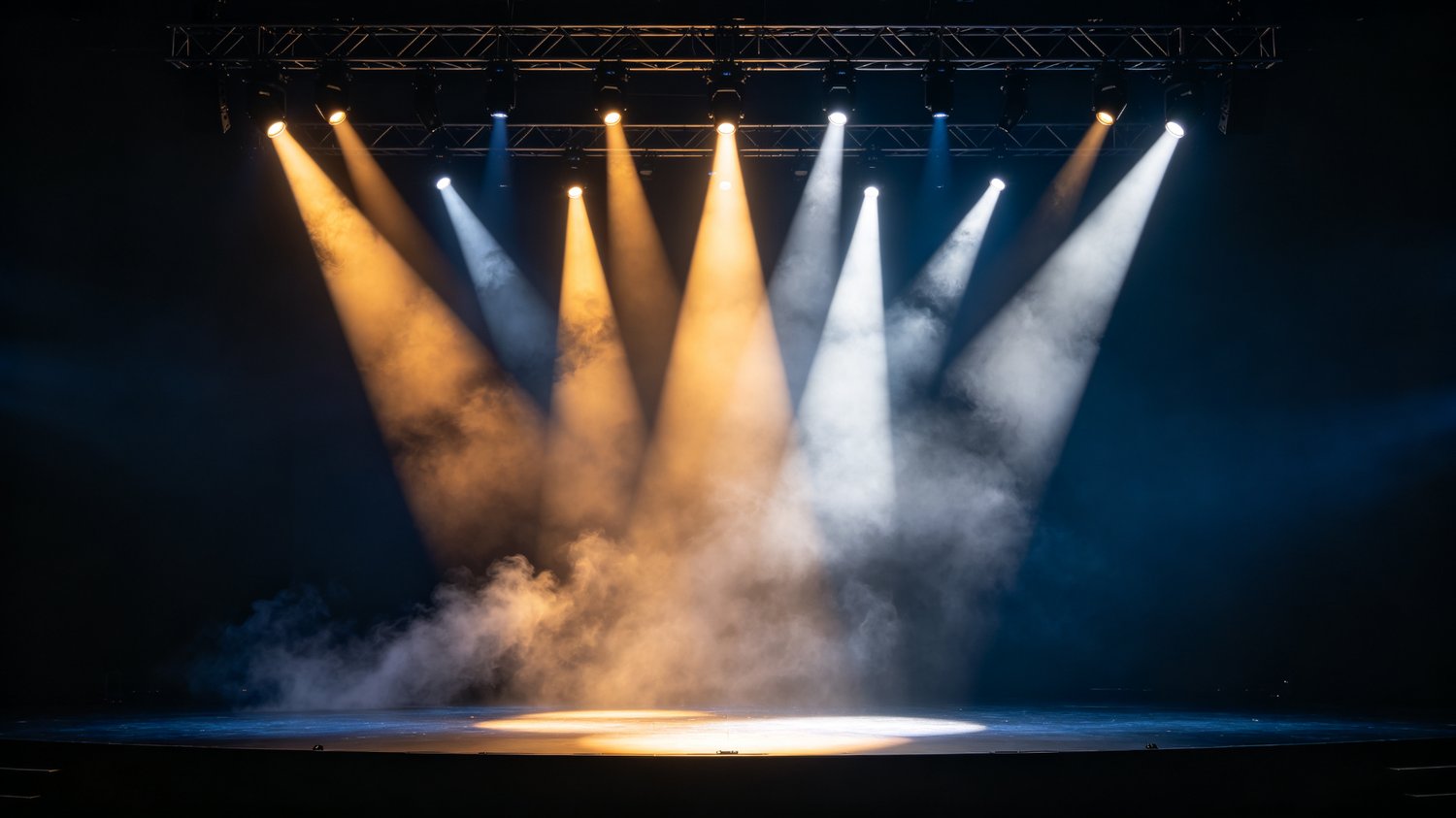
Discharge lamp (Beam Light Series)
- Very high brightness — the light column is visible to the naked eye.
- Sharp beam with strong long-distance penetration.
- Rich colour temperature and faithful colour rendering.
- Heavy, physical presence — maximum visual impact on stage.
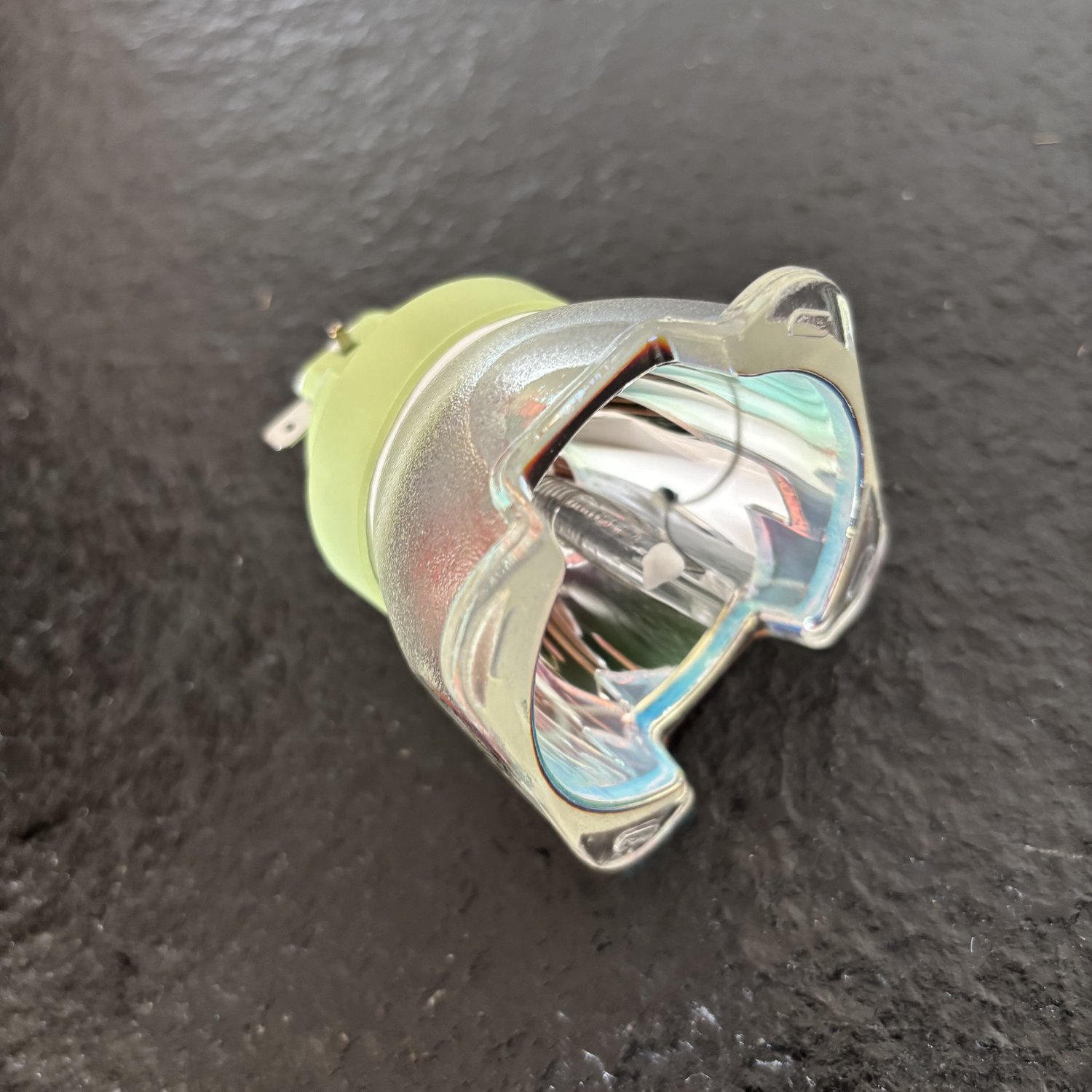
Inside the lamp, an inert gas fill sits in an insulated state. On ignition, current across the electrodes creates a field, the gas molecules ionise, and accelerated electrons collide with gas molecules to produce the arc. No filament to burn out or sag — the arc itself is the light source, and it is why beam fixtures driven by discharge lamps throw a bright, tight column that reads clearly over 50 metres.
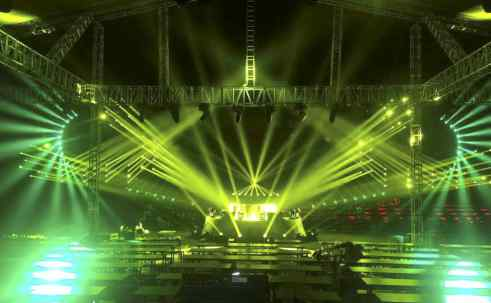 Beam Series — multi-beam sweep, high density
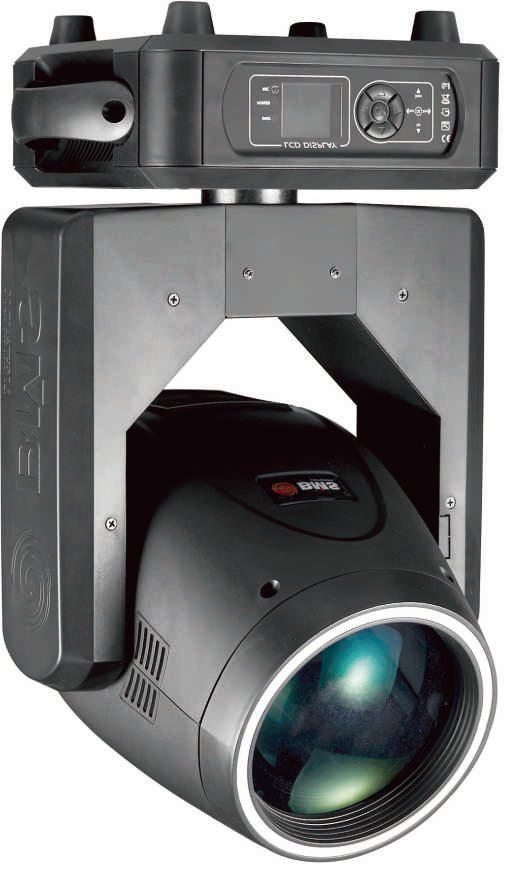 BMS-BEAM300S · 300W Super Beam
LED source (LED Beam & Spot Series)
- 20,000 h+ life — no routine lamp replacement.
- ~50% energy saving at equivalent brightness, with low heat output.
- Instant full output — no warm-up or strike delay.
- Quiet and cool — low maintenance cost, suitable for continuous use.
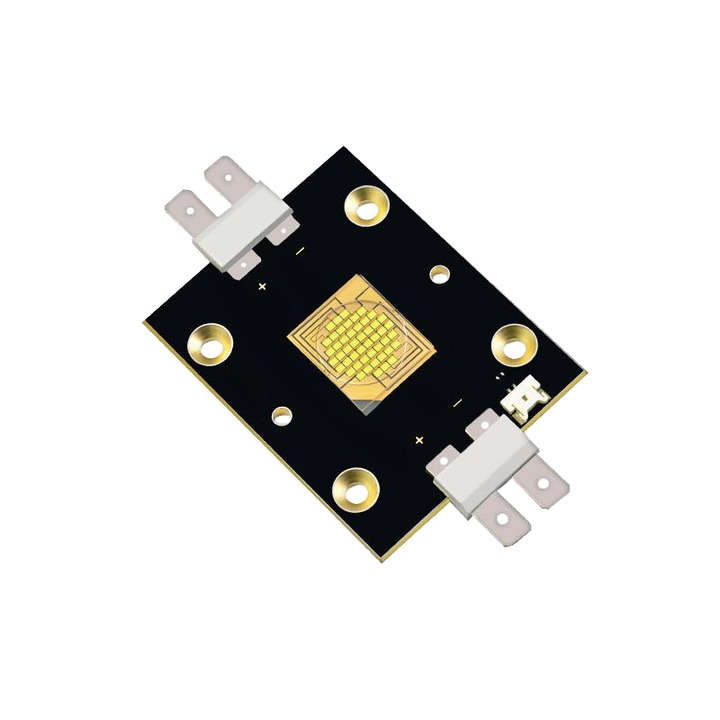
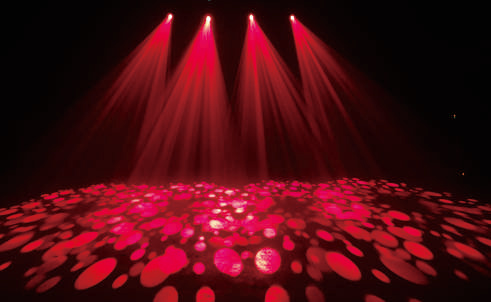 LED BSW — even coverage, one fixture many looks
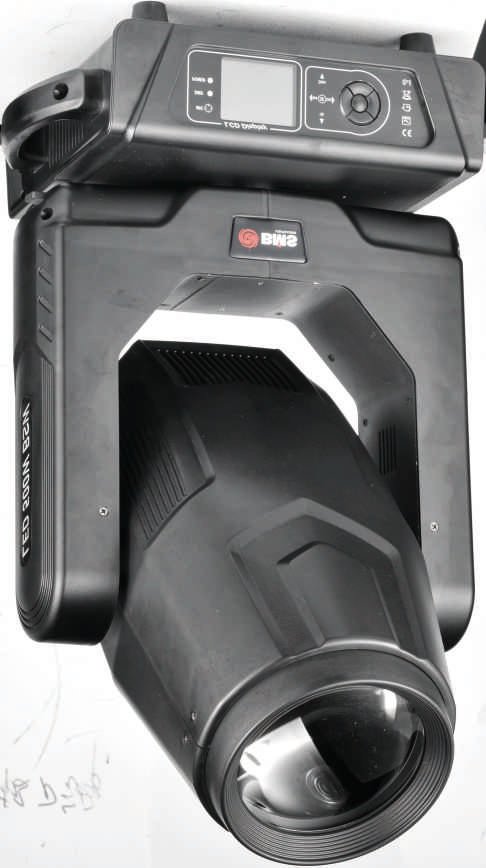 BMS-BSW500 · 500W LED Three-in-One
Head-to-head
| Consideration | Discharge lamp | LED source |
|---|---|---|
| Brightness | Extremely high, sharp column | High, even spot |
| Source life | ~1,000–2,000 h, lamp replacement required | 20,000 h+, no lamp changes |
| Power & heat | High power draw, significant heat | 50%+ energy saving, low heat |
| Ignition | High-voltage strike, warm-up required | Instant on, no warm-up |
| Maintenance cost | Lamps and fans are consumables | Long-life modules, minimal service |
| Light generation | High-voltage arc discharge | PN-junction electroluminescence |
| Typical use | Clubs, ballrooms, outdoor tourism — long distance | School auditoriums, bars running nightly — continuous use |
Send us your room dimensions and programme type, and our engineers will recommend the right series in one pass.
Talk to an EngineerStep 2: What the Six Functional Systems Actually Do
A moving head is described by its systems, not by a single wattage number. Every fixture in both series is built from the same six, and every one of them changes what the customer sees on the night.
1. Light source — decides brightness and service life
The 300S pairs a 300W high-intensity discharge lamp with a 15W RGB auxiliary LED that traces an ambient colour outline around the body, so the fixture still looks right when the beam is out. The BSW500 runs a single 500W white LED module at 8500K with a 20,000-hour rating. When you present either one, lead with why it is bright (arc discharge with no filament, or constant-current LED drive), then where that brightness pays off.
2. Optics — decides the shape of the beam
The 300S uses a 145 mm output aperture with a 2° ultra-narrow beam angle and coated lenses: high transmission, low loss, crisp edge, even centre. In the field this means beams stay tight and parallel — a row of fixtures sweeps as one coherent fan rather than a scatter of mismatched cones.
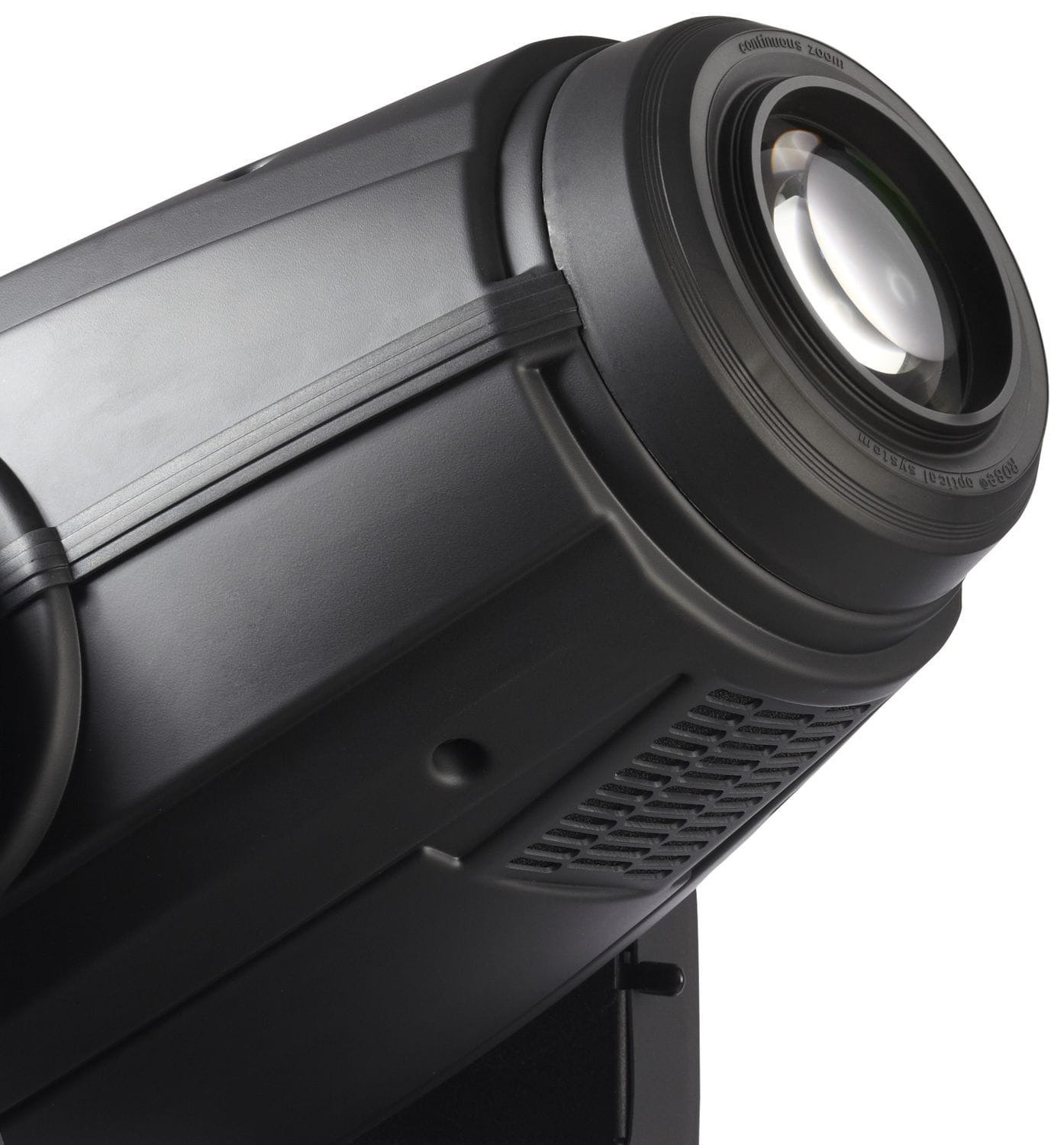
The BSW500 takes a different route: 5°–55° linear zoom on the same 145 mm aperture. That zoom range is the technical foundation of "one fixture, three roles" — sharp edges at the beam end, soft even coverage at the wash end, and any angle in between. Fewer fixtures, less cable, more programme flexibility.
3. Colour — decides how many colors it can display
The 300S carries a 14-colour wheel plus white with bidirectional rainbow rotation and half-colour positioning, so a single move can produce two colours at once. Positioning is repeatable, so a colour set on Friday looks the same on Saturday.
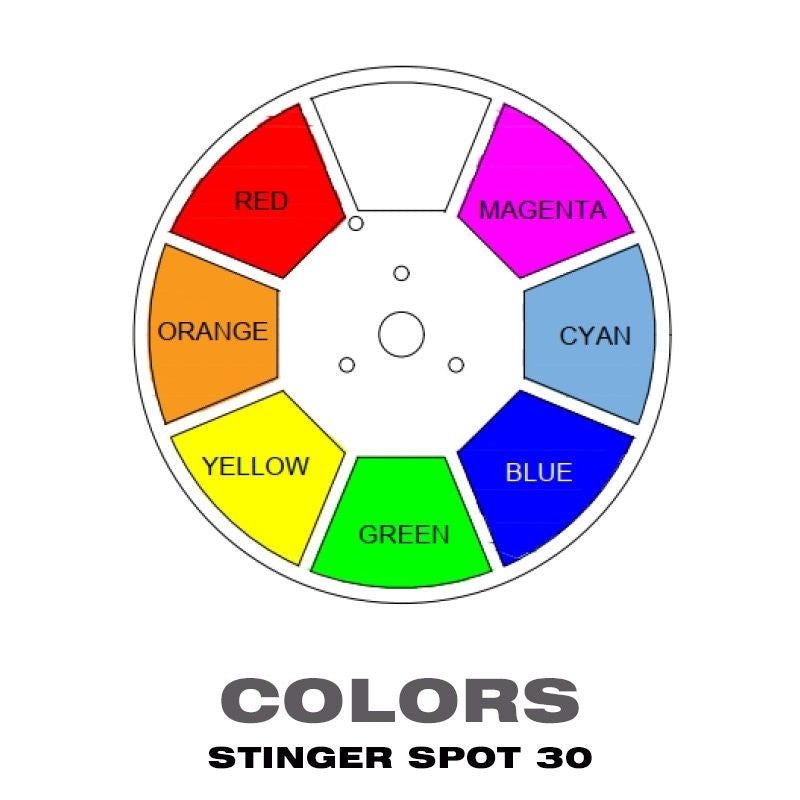
The BSW500 adds two professional-grade layers: CMY infinite colour mixing for smooth transitions to literally any colour, and CTO colour-temperature correction to shift warm or cool on demand. CTO is the feature ballroom and auditorium clients notice most — without it, fixtures sit at the wrong colour temperature against camera and ambient light.
4. Gobo — decides what the beam projects
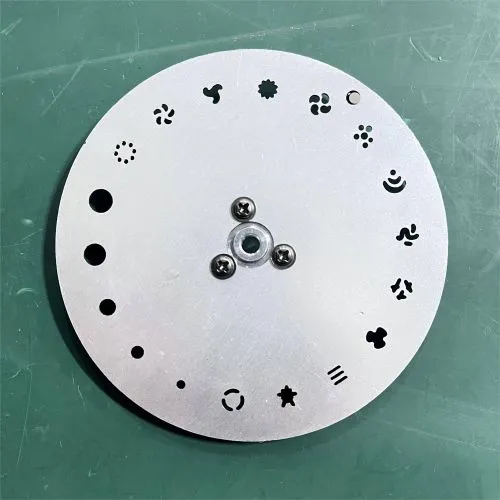
The 300S has a fixed gobo wheel with 13 patterns plus white, and supports gobo shake and continuous rotation to keep the look alive. Logos, geometric shapes and celebration graphics are all covered.
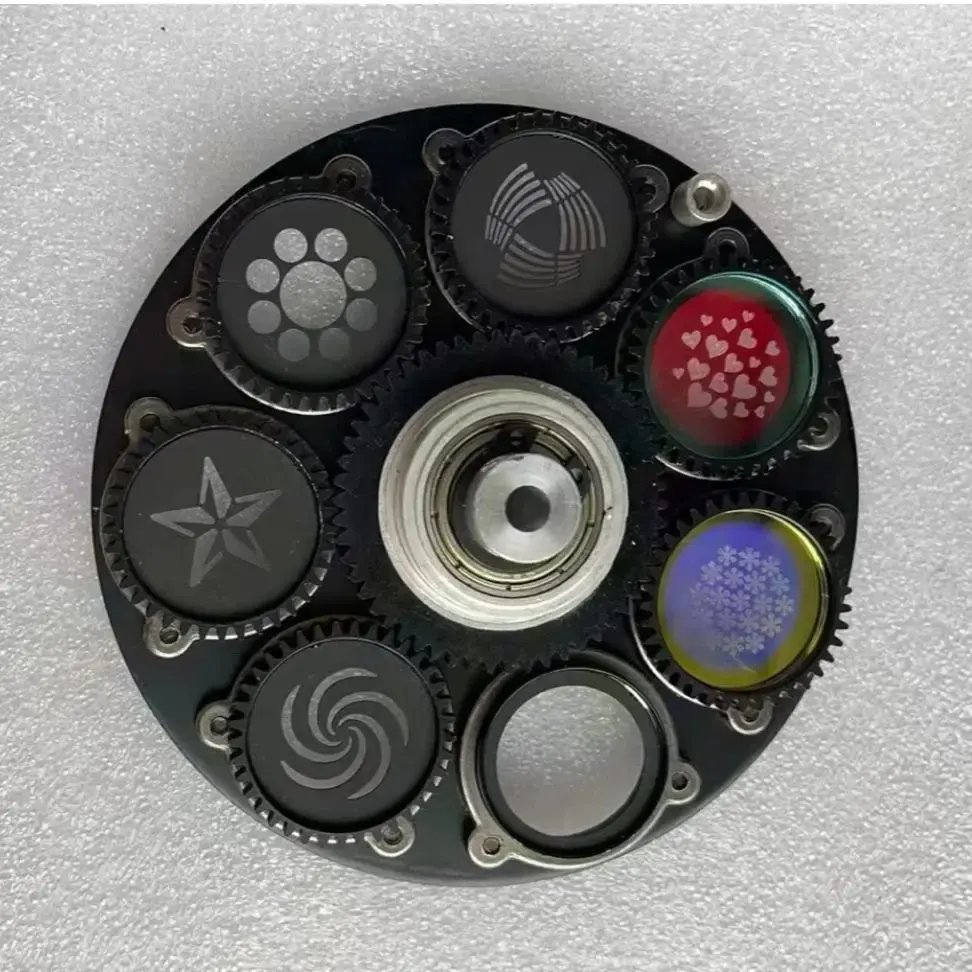
The BSW500 runs a dual-gobo system: a fixed wheel for fast colour-and-pattern coverage, and a rotating glass gobo wheel for fine, richly layered projection with accurate colour. Glass gobos are the differentiator at this price point — comparable fixtures usually ship a fixed wheel only, and the difference in projection detail is immediately visible. Custom glass gobos can be produced to order.
5. Effects — decides whether one beam becomes a show
On the 300S, a dual prism wheel (8-facet + 48-facet) rotates and stacks in both directions to double or triple beam density; an independent frost disc turns a hard beam into soft wash; a seven-colour rainbow disc adds flowing colour; and multi-mode strobe tracks the music. On one fixture that covers a slow ballad and a peak-time drop in the same night.
The BSW500 trades prism stacking for control: a variable frost for smooth diffusion, high-speed multi-rate strobe for energy, and a mechanical linear iris that lets the operator shrink the spot on cue. The iris is a detail configuration — pinpoint specials and clean blackouts are only possible with it.
6. Pan, tilt and control — decides whether it moves well and talks reliably
Both fixtures offer 540° pan and 240° tilt with belt-drive transmission and automatic position correction, so they do not drift over a long run. The 300S is 16/24-channel with DMX512/RDM and a 5-inch reversible LCD; the BSW500 is 24-channel with a touchscreen interface, DMX512/RDM and 180° display flip.
RDM remote management is the most practical feature for system integrators: addressing and health checks can be done remotely instead of on a ladder.
Flagship Specifications at a Glance
| Specification | BMS-BEAM300S · 300W Super Beam | BMS-BSW500 · 500W LED Three-in-One |
|---|---|---|
| Source | Imported 300W discharge lamp + 15W RGB LED | 500W LED white module, 8500K, 20,000 h |
| Optics | 145 mm aperture, 2° beam angle, dual-source mixed path | 145 mm aperture, 5°–55° linear zoom, coated optics |
| Gobos | Fixed wheel, 13 patterns + white | Fixed 11 patterns + white; rotating glass 7 patterns + white |
| Colour | 14 colours + white, rainbow / bidirectional flow | CTO + 7 colours + white; CMY infinite mixing |
| Prisms & effects | Dual prism 8-facet + 48-facet, bidirectional stacking; frost, rainbow disc, 0–100% dimming, multi-mode strobe | Frost, multi-rate strobe, mechanical linear iris, 0–100% dimming |
| Pan / tilt | 540° / 240°, automatic position correction | 540° / 240°, automatic position correction |
| Control | 16/24CH, DMX512/RDM, 5" LCD, 180° flip | 24CH, DMX512/RDM, touchscreen, 180° flip |
| Power / build | 450W, AC100–240V, 313 × 248 × 515 mm, 13 kg, IP20 | 600W, AC100–240V, 383 × 278 × 627 mm, 22.5 kg, IP20 |
Model Range: Where Each Fixture Sits
Both series extend well beyond the flagship. The Beam Light Series runs from 295W to 420W in beam, beam-spot and prism-heavy configurations. The LED Beam & Spot Series spans 150W to 700W, including 200W/250W/300W/460W/500W three-in-one units and a 700W full-function profile with a 4-blade framing system.
| Family | Selected models | Notes |
|---|---|---|
| Beam Light Series | 420W Super Beam · 382W Super Moving Beam | 2° beam, 13 colours, prism 8+48, 14 kg class |
| 380W Three-in-One Beam-Spot | 2°–50° or 2°–38° zoom, Philips or domestic lamp options | |
| 298W / 295W / 303 models | Compact super beam and sprite beam options from 7.8 kg | |
| LED Beam & Spot Series | 700W Full-Function Profile | 9200K, 5°–48°, CMY + CTO, 4-blade framing, 30 kg |
| 500W / 460W / 300W / 250W / 200W / 150W BSW | Zoom ranges from 7°–21° up to 9°–42°, CMY and CTO variants | |
| 360A Beam · 360A Module Beam | 1.8°–2° beam, up to 17 colours, prism 16+24 |
Step 3: Match the Fixture to the Room
In a quotation meeting, ask what the space is before naming a model. The application almost always answers the question for you.
| Application | Recommended series | Why | What it looks like |
|---|---|---|---|
| Bar / KTV night venue | LED Beam & Spot Series | Three-in-one flexibility, long life, low maintenance | Gobo, wash and beam rotate through the night; silent operation does not disturb guests |
| Ballroom / wedding & celebration | LED BSW + Beam Light Series | Rich gobos, accurate colour, strong beam presence | Petal-style beam clusters interlaced with soft wash colour |
| School auditorium / meeting room | LED Beam & Spot Series | Quiet, instant on, minimal maintenance | Clean, soft, even light; economical for back-to-back events |
| Outdoor tourism / landscape lighting | Beam Light Series (high output) | High brightness, long throw, weather-resistant build | Beams stay readable at distance, day and night programming |
The rule of thumb: ask about the scenario first, then name the series. Long distance and maximum brightness points to the Beam Series; multi-role work over long hours points to the LED three-in-one.
Frequently Asked Questions
Should I buy a discharge-lamp beam or an LED beam?
Buy on duty cycle and distance. If the fixture runs long hours most days and sits in a room where noise and running cost matter — auditoriums, bars, hotel venues — LED wins on total cost of ownership. If the brief is maximum brightness, razor-sharp beams and long throw, discharge-lamp beam fixtures are still unbeatable.
Is a three-in-one fixture a compromise?
Not with a 5°–55° linear zoom behind it. A well-designed BSW does beams and washes credibly, and it removes fixtures from the rig — less hanging, less cabling, less commissioning, and one fewer control channel set to maintain.
Do I need CMY and CTO, or is a colour wheel enough?
A colour wheel is faster for effects and set-list work. CMY and CTO matter when colour accuracy and smooth transitions do: ballrooms, broadcast, conference and any venue where a fixture has to match a theme colour or camera white balance exactly.
How much maintenance should I budget for?
Discharge-lamp fixtures consume lamps and fans — plan for lamp replacement across a season. LED fixtures carry a 20,000-hour module rating and effectively move maintenance to periodic cleaning and firmware checks.
Where to Go Next
This guide covers two series. The full BMS range also includes profile and face lighting, wash fixtures, conference luminaires, entertainment effects and outdoor waterproof models — each covered in its own technical course and datasheet.
If you are specifying a new venue or retrofitting an existing one, send us the room, the programme and the fixture list. Our engineering team will return a complete fixture schedule with a system design.